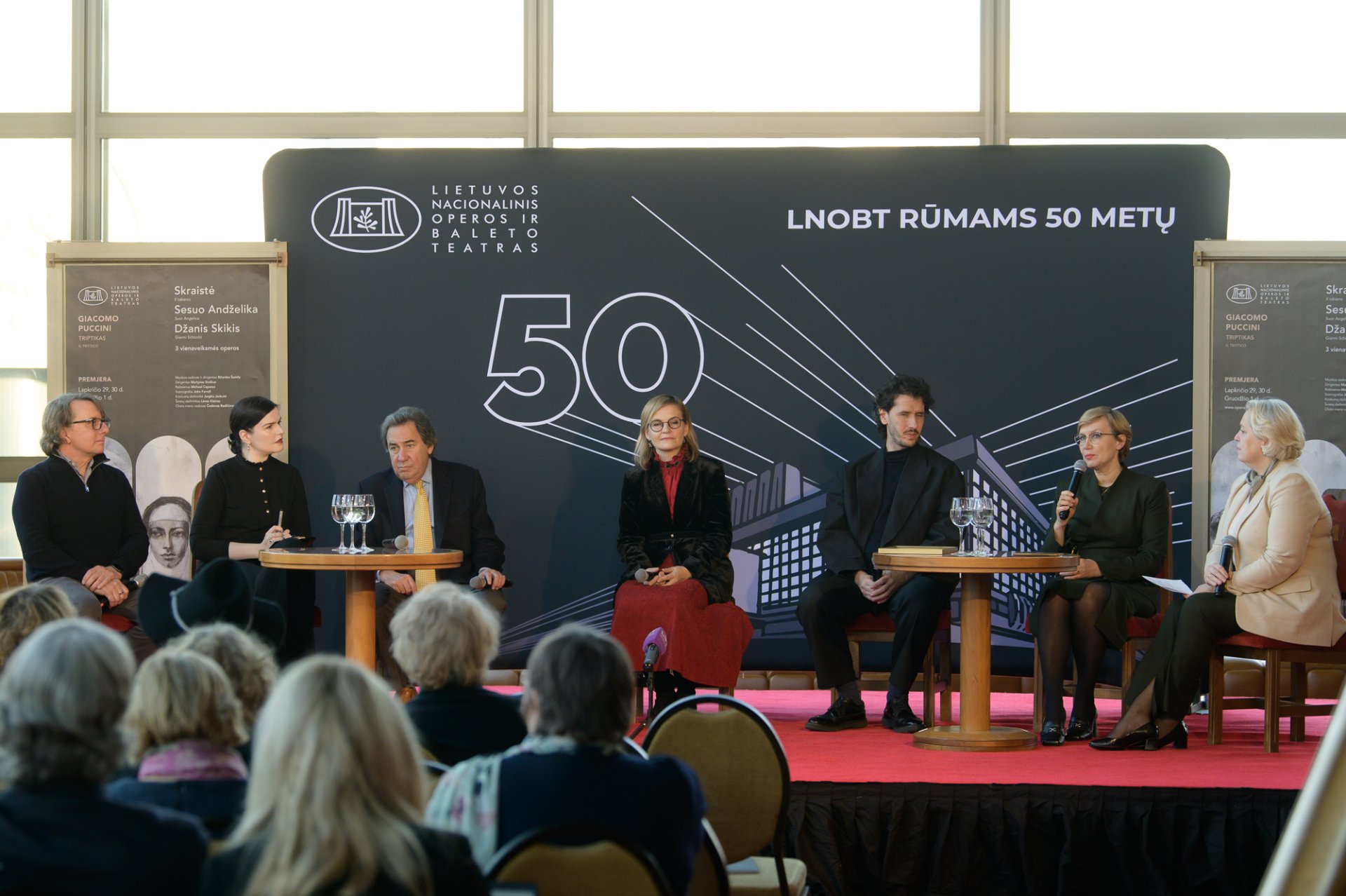
This weekend the Lithuanian National Opera and Ballet Theatre invites you to the premiere of Giacomo Puccini's opera triptych "The Cloak, Sister Angelica, Gianni Schicchi". Three one-act operas – three different historical periods and three different moods on stage.
"2024 is being called the year of Giacomo Puccini, so our theatre could not miss the opportunity to pay a significant tribute to this composer. The premiere will take place on November 29 – the same day that, 100 years ago, the heart of the opera genius ceased to beat," - says Laima Vilimienė, the General Manager of the LNOBT. "The full triptych of Puccini’s one-act operas is being staged for the first time in the recently renovated LNOBT building, which just a few weeks ago celebrated its 50th anniversary. And since there are three operas, the number of performers in the premiere is unusually large: every night, not counting the chorus supernumeraries, the stage will feature 47 soloists".
Among the prominent performers in the large ensemble are popular Lithuanian artists Gabrielė Bukinė, Sandra Janušaitė, Viktorija Miškūnaitė, Jovita Vaškevičiūtė, Liudas Mikalauskas, Tomas Pavilionis, Ukrainian soloists living in various European countries such as Andrei Bondarenko, Yuriy Yurchuk, Alexander Schulz, Americans Lisa Chavez, Kelly Glyptis, Gregory Turay, Italian Oreste Cosimo, and others.
"G. Puccini, in my opinion, is one of the greatest composers who was able to transform theatre into music. He is a genius of melody with the talent for creating the most beautiful arias, and also masterfully developing themes and leitmotifs in his works. He is also a brilliant orchestrator, whose instrument combinations send chills down the spine of listeners," - says the theatre's Chief Conductor and Music Director of the premiere maestro Ričardas Šumila.
A Tribute to the Composer
"The true director of this triptych is G. Puccini. I am only his assistant, helping to bring to life the ideas that are all present in the composer’s score," - claims director Michael Capasso, who arrived from New York.
The guest emphasized the diversity of the triptych’s operas: "The first opera, The Cloak, is sensual, earthy, and brutal, as if a little tainted by the dirt of life. Sister Angelica is the absolute contrast to it: this opera takes us into a sanctuary of elevated religious feelings. Interestingly, G. Puccini was the first musician in his family who did not compose church music, even though his real sister was a nun. And then, Gianni Schicchi is the only comedy Puccini ever wrote. It mocks the Florentine families and people that the composer disliked the most," - says the director.
The premiere’s stage designer John Farrell, also from New York, agreed, saying that in a sense, the scenography of the triptych was also created by G. Puccini, since the clues left in the operas allow us to understand what kind of staging solutions would be the best fit.
"In The Cloak, the setting is specified quite clearly: it’s Paris, on the banks of the Seine, a barge where people work hard. This is the industrial, unpolished Paris that tourists typically don't see. There are many earthy tones and mysterious sunset lighting – by the way, it’s interesting that all of the triptych’s operas take place in the evening or at night. Sister Angelica is visually the most realistic, but the opera’s finale holds an unexpected miracle that will deeply move many viewers. As for the scenography of Gianni Schicchi, it was dictated by the depicted period – the early Middle Ages," - the scenographer reveals.
Historical-Style Costumes Will Delight the Eyes
"When I saw the models of the future production's scenography, I could already imagine what the director and stage designer were thinking, and which direction we should move in," - says costume designer Jurgita Jankutė. "I was delighted to see that the focus is on specific historical periods. In The Cloak, this is the early 20th century, already immortalized in photographs, so we could find images of people resembling the opera's characters. In Sister Angelica, we see a 17th-century women's convent. As we know, the nuns' robes have hardly changed since the Middle Ages, while the costume of the rich Princess in the production was inspired by the paintings of Anthony van Dyck.
For Gianni Schicchi, I went to Florence myself to search for traces of the characters. I looked for them in the streets, museums, and churches, and found the most useful material in the frescoes from the Quattrocento period. The costumes from this period are multi-layered and made of velvet, so they are not light. But they help the performers immerse themselves in the playful characters of the comedy. There’s a lot of red, symbolizing the family bond in the opera, and gold, as this family is wealthy and greedy," - explains Jankutė.
The designer encourages the audience to attend the performances of Puccini’s opera triptych at least a few times, as it is impossible to notice all the small details on stage during a single viewing.
The opera triptych "The Cloak, Sister Angelica, Gianni Schicchi" will be performed on the stage of the LNOBT from November 29 to December 7 this season.